Welcome to the NBA’s Eastern Conference—where pretenders outnumber contenders like Subways dominate your neighborhood delis.
Indeed, half of the dubiously qualified playoff teams boast sub-.500 records heading into the 2013-2014 All-Star game. The Atlanta Hawks, Washington Wizards, Brooklyn Nets and Charlotte Bobcats are a collective 97-109.
And if that doesn’t cause you to invest heavily in cognitive therapy, just take a gander at the 20-33 Cleveland Cavaliers. They’re only three games removed from a postseason berth despite being 13 games below the threshold of mere functional mediocrity.
There simply isn’t getting around the depressing fact that six squads east of the Mississippi wouldn’t even sniff qualifying status in the West. Case in point: The ninth-place Memphis Grizzlies would hold the No. 3 playoff spot if it changed conferences. Circuitous logic, yes, but the fact remains.
Fortunately, the remaining two teams in the East own two of the three highest winning percentages in the league. Discovering their identities shouldn’t prove entirely difficult.
Yesterday we examined the pretending and contending basketball entities from the superior conference. We’ll now do the same with those hailing from its top-heavy cousin.
Disclaimer: Reaching a conclusion on the Eastern “have’s” and “have nots” won’t require nearly the same time, energy or mental capacity. Or space on your browser.
Pretenders
4. Chicago Bulls, 27-25, 4th in East
 By virtue of their 92-76 win over the bust-worthy Brooklyn Nets last night, the Bulls remained above .500 in the standings.
That also earned them the necessary word-processing real estate for this ranking—for now.
Since Tom Thibodeau assumed the head coaching reigns in Chicago in 2010, the Bulls’ relentless defensive efforts have matched the basketball fundamentals instilled by their fiery leader. This 2013-2014 campaign is no different.
The Bulls rank second in the NBA with a maddeningly stingy 92.7 points per game allowed. They have also forced the third-lowest shooting percentage (43.5) and control the boards to the tune of 44.8 rebounds per game (No. 9).
Tenacious center Joakim Noah fuels this group with 11.5 rebounds, 1.4 blocks and 25 double-doubles on the season, including a triple-double on February 2.
Shooting guard Jimmy Butler is the thieving stud of the backcourt with 2.0 steals per game. He, along with underrated power forward Taj Gibson, have contributed an impressive total of 5.0 win shares this year.
But that’s really where the accolades stop.
Chicago is utterly anemic on offense, producing just 92.3 PPG. No teams score fewer.
The obvious root cause of this team-wide deficiency is the all-everything Derrick Rose being lost for the season. Management then ensured this shortcoming’s lasting future by trading away leading scorer Luol Deng for salary-cap purposes.
Carlos Boozer now leads the way with a meager 14.8 PPG. And he finds himself on the bench late in games more often than not.
In short, this team is defensive-minded to the point of total offensive futility. Chicago competes with the heart of a champion behind Noah’s play and Thibodeau’s vision. But it’s just not enough.
The Bulls must accept that a 2-2 mark against the East-leading Indiana Pacers and Miami Heat will constitute the achievements worthy celebrating this year.
We’ll revisit this proud franchise when it has a complete, Rose-powered arsenal at its disposal.
But until then, it will remain on the sidelines as an honorable pretender.
3. Toronto Raptors, 28-24, 3rd in East
 Breaking: There’s an NBA team in Canada.
The 2013-2014 Raptors are as cosmopolitan as the city with which they call home.
Lithuanian-born big man Jonas Valanciunas, the well traveled John Salmons and the native Venezuelan but American-educated Greivis Vasquez embody the diverse and haphazardly hodgepodge nature of this Canadian-based squad.
Cultural niceties aside, Toronto’s basketball relevancy resides in two players.
Backcourt mates Kyle Lowry and DeMar DeRozan are the duo that lends any credence to the Raptors’ playoff-worthy status.
Lowry was this season’s most prominent All-Star snub. He has amassed 16.7 PPG, 4.5 RPG, 7.6 APG and 1.6 SPG, not to mention having posted 12 double-doubles and one triple-double. Advanced metrics drive the point home via a well above-average 20.1 player efficiency rating and sixth-ranked 8.1 win shares.
DeRozan, meanwhile, actually made the All-Star squad—deservedly or not—with his team-high 22.4 PPG. The 6’7’’ two-guard also brings a balanced 4.6 RPG, 3.8 APG and 1.2 SPG to the table.
Unfortunately, the Lowry-DeRozan combo and a scrappy top-four team defense (96.9 PPG) cannot save the Raptors from pretending status.
Valanciunas as an improved second-year center—8.8 RPG, 3.5 win shares—is a nice development. And the fact that Amir Johnson, Terrence Ross and Patrick Patterson all average exactly 10.3 PPG is a cute, but insignificant statistic.
So let’s take heed to the only real pertinent metric: 0-12 versus the Warriors, Rockets, Clippers, Heat, Suns, Trail Blazers and Spurs. When the Raptors play good teams, bad things happen.
Oh, and they’re 0-3 against the Bobcats.
In any case, aside from formidable point man Lowry, Toronto is an ineffective collection of non-complementary pieces. Even DeRozan—its No. 1 scorer—makes only 31.8 percent of his shots from distance.
We’ll give head coach Dwane Casey his due props for getting the most out of this flawed bunch.
But at the end of the day, the Raptors owe their cosmetically attractive record to a historically weak conference. A Finals appearance is nowhere in sight.
Contenders
2. Indiana Pacers, 40-12, 1st in East
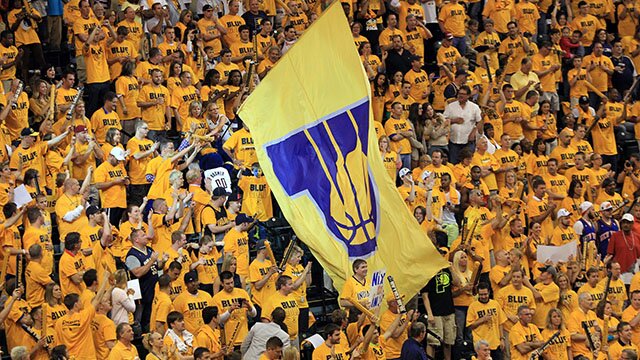 We’re guessing that this ranking will only add fuel to Indiana’s self-perceived hate-fire as overlooked underdogs.
The Pacers stand alone atop the East standings with a phenomenal 40 wins at the All-Star break. They are an overwhelmingly dominant and league-best 25-3 within friendly confines of Bankers Life Fieldhouse.
Frank Vogel’s Pacers generate their tremendous success through an unrivaled defensive corps. The opposition has mustered up just over 90 PPG on the season. There are even 10 instances when opposing clubs failed to score 80.
Similar to Portland, the Pacers have exerted their strength on the hardwood with primarily one lineup. PG George Hill, SG Lance Stephenson, SF Paul George, PF David West and C Roy Hibbert have gone 36-11 as a starting group.
Then again, they’re 4-1 when either C.J. Watson replaces Hill or Danny Granger starts in place of Stephenson.
Individually, George is a bona fide two-way star. He averages 22.2 PPG, 6.4 RPG, 3.4 APG and 1.8 SPG on 43.8 percent shooting and 37.0 from distance. He boasts a 20.4 PER, with a more notable 7.8 win shares (No. 7)—including a league-high 4.5 on defense.
Speaking of which, Hibbert falls just behind George at No. 2 with 3.9 defensive win shares. He rates top-three with 2.5 BPG and leads his club with an all-encompassing paint presence and 7.7 RPG.
West completes the frontline and sets the tone for the never-back-down ethos that governs this team. The power forward also contributes 13.7 points and 6.5 boards.
Hill, for his part, is the seldom-recognized point guard who actually leads the Pacers with a 37.2 percentage from downtown. Stephenson, meanwhile, rounds out the starting-five as the do-it-all glue (14.1 PPG, 7.3 RPG, 5.1 APG) who often orchestrates things offensively.
He also has more triple-doubles (four) than any player in the Association. And how wasn’t that All-Star worthy?
However, in recent weeks, the Pacers have appeared vulnerable with a 7-5 mark over their past 12 games. That includes a loss to the 16-38 Magic, two defeats by a combined 32 points to the playoff-qualifying Suns and an embarrassing letdown against the Mavericks at home.
Coincidentally, Indiana also owns a mediocre 7-5 record against contending or quasi-contending teams in the NBA.
But all this might as well amount to statistical noise because we understand implicitly what this season boils down to for the Pacers.
Can they beat the Heat? And can they beat them in their inevitable head-to-head in the Eastern Conference Finals?
Well, they beat them once in two games and can surely do it again.
Yet, until that expected penultimate matchup with the Heat occurs, the Pacers must pay homage to the defending champs and occupy second place in the contender rankings.
1. Miami Heat, 37-14, 2nd in East
It’s often said in NBA circles that the team with the best player in a closely contested playoff series owns the competitive advantage.
More than any one particular matchup—say, interior size versus speed in the open court—the superstar will ultimately provide the winning edge.
In the all but certain Conference Finals between Miami and Indiana, the Heat will have LeBron James—a true superstar and still the best player in the Association.
Until Kevin Durant wins an MVP or Finals trophy, James and his 28.9 PER, 10.3 win shares and championship belt keep him secured in the uppermost echelon. And that will prove decisive against Indiana and its star—but not yet superstar—Paul George.
So forget all the talk of size versus speed; of Bankers Life Fieldhouse versus AmericanAirlines Arena; of Indiana’s No. 1 defense versus Miami’s No. 1 shooting offense; of underdog-laden motivation versus title-defending pride.
Okay—those dynamics are significant. As is Dwyane Wade’s health and Indiana’s bench production.
But when the smoke clears, the best player decides the game between the two best teams.
And LeBron James is the best player.
Miami retains its hold on the title of No. 1 contender.
Follow me on Twitter @jlevitt16