eDraft has created some amazing advanced metrics for premium users over the course of the last few months. The roll out has been strong and our developers have done an amazing job helping you (the readers) understand what these metrics mean for you and how they can help during the fantasy football season.
Please click on this link to sign up for our premium membership, We promise that you won't be disappointed by what we have planned for the upcoming season. As an added bonus, you will receive premium tools for fantasy baseball, basketball and hockey as well.
We will explain each of these advanced metrics in unison with the daily roll out of our 2014 Fantasy Football Preview. We start with player consistency, which can be found here for premium users.
Players Consistency
This is an extremely important metric for fantasy football owners. What it does is helps you understand the nuances of fantasy football performance. How a player got to the final point in our overall rankings at the end of the season and what it means for his overall production heading into the following year.
In addition to this, you will see these metrics updated throughout the course of the season, so you know who have been the most consistent and who hasn’t.
It works like this.
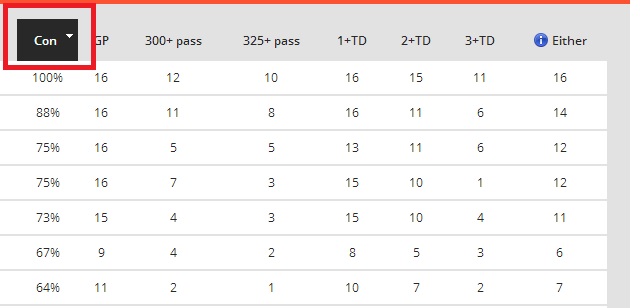
Quarterback: Either 300-plus passing yards or two-plus touchdowns. If a quarterback hits that plateau during a given game, his consistency rankings goes up. If not, it goes down. For example, Alex Smith hit either mark in nine of his 15 starts. That put his consistency percentage at 60 percent.
Running Back: In order to be on the positive side of the ledger, a running back needs to put up either 100-plus yards or one touchdown. Anything short of that and he’s dinged from a consistency perspective.
Wide Receiver: Once a player at this position has tallied 100 yards and/or one touchdown, he’s given a positive for that week. Unfortunately for fantasy owners, Josh Gordon led in this category back in 2013.
Tight End: A lesser barrier of success than at the wide receiver position, fantasy tight ends must put up either 50-plus yards or one score to be categorized as consistent in a given week.
Why It’s Important
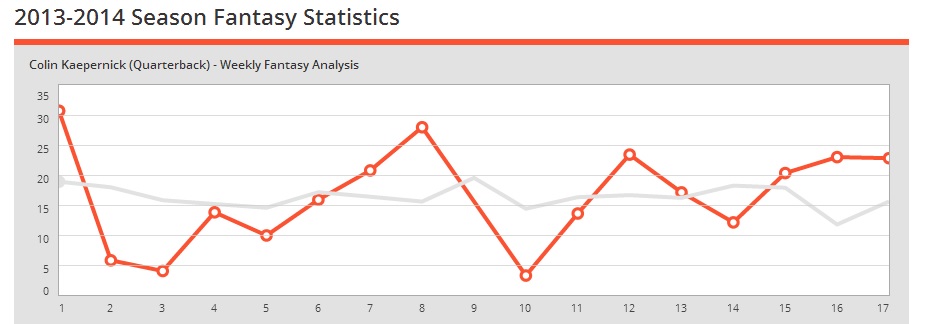
Most owners look simply at where a player ended up the season, not how he got there. A perfect example of this would be San Francisco 49ers quarterback Colin Kaepernick, who finished as the ninth-ranked fantasy quarterback last season.
Unfortunately for those who were relying on him, 48 percent of his fantasy points came in five starts. Just how much did his Week 1 performance help you in the grand scheme of things? That’s the point of this metric.